
Arkose flagged 96.8% of sampled Instinct sessions as risky; none was linked to an attack
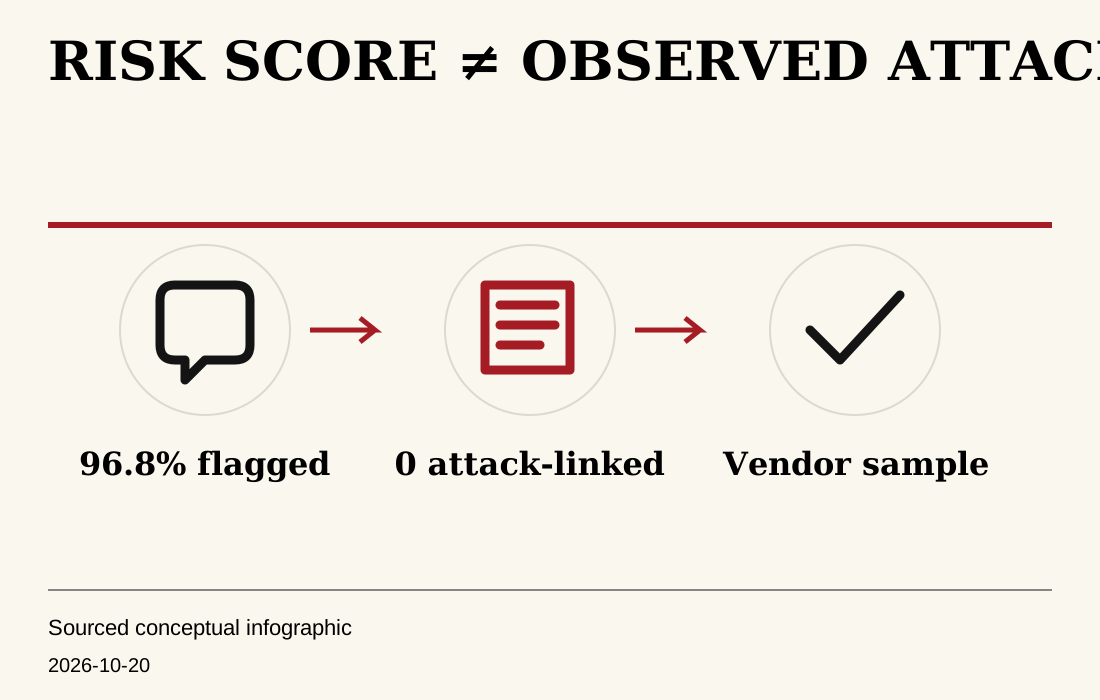
Arkose vendor sample, July-September 2026; session count not stated. Risk score is not an attack rate.
Sources: Arkose Labs, via Business Wire
Businesses use fraud scores to decide whether automated visitors should pass a security check. Arkose Labs' July-September traffic report separates how risky an agent looks from whether its sessions were linked to attacks. Our reading below is about that distinction, not a verdict that Instinct is safe.
What happenedArkose Labs reports that 96.8% of the Instinct sessions in its Q3 production-traffic sample looked medium or high risk to its detection systems. None of the observed Instinct sessions was linked to an attack.
Why it mattersA fraud score and an observed attack measure different things. The report argues that businesses need to distinguish legitimate agents from malicious traffic, rather than allow or block every agent.
Try thisIf an agent hits a security check, use the service's supported verification route. Treat an access block as a limit to respect, not evidence that every agent is malicious.
Two measures. Different questions.
Looked medium or high risk96.8% of observed Instinct sessions
Linked to an attack0 observed Instinct sessions
Source: Arkose Labs, via Business Wire
Arkose Labs · Published 20 October 2026. Vendor report, not an independent product audit. Sample covers 1 July to 30 September 2026 on Arkose-protected traffic; the release does not give an Instinct session count. Zero attack-linked sessions in this sample is not a guarantee of safety.